Services for the coming week
Sunday, 21st July, The Eighth Sunday after Trinity
8.00 am Holy Communion (BCP)
10.00 am Parish Communion
10.00 am Holy Communion at Marishes
12.30 pm Baptism
6.00 pm Evensong
Monday, 22nd July
1.00 pm Funeral
Tuesday, 23rd July
11.00 am Funeral
Wednesday, 24th July
10.00 am Holy Communion
Sunday, 28th July, The Ninth Sunday after Trinity
8.00 am Holy Communion (BCP)
9.30 am Holy Communion at Levisham
10.00 am Parish Communion
6.00 pm Evensong
Welcome to our worship for
the Eighth Sunday after Trinity,
Sunday, 21st July

The Eighth Sunday after Trinity
Lord God, your Son left the riches of heaven and became poor for our sake:
when we prosper save us from pride, when we are needy save us from despair, that we may trust in you alone;
through Jesus Christ our Lord
when we prosper save us from pride, when we are needy save us from despair, that we may trust in you alone;
through Jesus Christ our Lord
Collect
Almighty Lord and everlasting God, we beseech you to direct, sanctify and govern both our hearts and bodies in the ways of your laws and the works of your commandments; that through your most mighty protection, both here and ever, we may be preserved in body and soul; through our Lord and Saviour Jesus Christ, who is alive and reigns with you, in the unity of the Holy Spirit, one God, now and for ever.
Amen
Amen
Readings for Today
First Reading: Jeremiah 23. 1-6
Woe to the shepherds who destroy and scatter the sheep of my pasture! says the Lord. Therefore, thus says the Lord, the God of Israel, concerning the shepherds who shepherd my people: It is you who have scattered my flock, and have driven them away, and you have not attended to them. So I will attend to you for your evil doings, says the Lord. Then I myself will gather the remnant of my flock out of all the lands where I have driven them, and I will bring them back to their fold, and they shall be fruitful and multiply. I will raise up shepherds over them who will shepherd them, and they shall not fear any longer, or be dismayed, nor shall any be missing, says the Lord.
The days are surely coming, says the Lord, when I will raise up for David a righteous Branch, and he shall reign as king and deal wisely, and shall execute justice and righteousness in the land. In his days Judah will be saved and Israel will live in safety. And this is the name by which he will be called: ‘The Lord is our righteousness.’
Psalm 23
Response : ‘The Lord is my shepherd, there is nothing I shall want. The Lord is my shepherd, there is nothing I shall want.
The Lord is my shepherd; therefore can I lack nothing. He makes me lie down in green pastures and leads me beside still waters. He shall refresh my soul and guide me in the paths of righteousness for his name's sake. R
Though I walk through the valley of the shadow of death, I will fear no evil; for you are with me; your rod and your staff, they comfort me. R
You spread a table before me in the presence of those who trouble me; you have anointed my head with oil and my cup shall be full. R
Surely goodness and loving mercy shall follow me all the days of my life, and I will dwell in the house of the I Lord for ever. R
Second Reading: Ephesians 2. 11-end
Remember that at one time you Gentiles by birth, called ‘the uncircumcision’ by those who are called ‘the circumcision’—a physical circumcision made in the flesh by human hands— remember that you were at that time without Christ, being aliens from the commonwealth of Israel, and strangers to the covenants of promise, having no hope and without God in the world. But now in Christ Jesus you who once were far off have been brought near by the blood of Christ. For he is our peace; in his flesh he has made both groups into one and has broken down the dividing wall, that is, the hostility between us. He has abolished the law with its commandments and ordinances, so that he might create in himself one new humanity in place of the two, thus making peace, and might reconcile both groups to God in one body through the cross, thus putting to death that hostility through it. So he came and proclaimed peace to you who were far off and peace to those who were near; for through him both of us have access in one Spirit to the Father. So then you are no longer strangers and aliens, but you are citizens with the saints and also members of the household of God, built upon the foundation of the apostles and prophets, with Christ Jesus himself as the cornerstone. In him the whole structure is joined together and grows into a holy temple in the Lord; in whom you also are built together spiritually into a dwelling-place for God.
Gospel Reading: Mark 6. 30-34, 53-end
The apostles returned from their mission. They gathered around Jesus, and told him all that they had done and taught. He said to them, ‘Come away to a deserted place all by yourselves and rest a while.’ For many were coming and going, and they had no leisure even to eat. And they went away in the boat to a deserted place by themselves. Now many saw them going and recognized them, and they hurried there on foot from all the towns and arrived ahead of them. As he went ashore, he saw a great crowd; and he had compassion for them, because they were like sheep without a shepherd; and he began to teach them many things. When they had crossed over, they came to land at Gennesaret and moored the boat. When they got out of the boat, people at once recognized him, and rushed about that whole region and began to bring the sick on mats to wherever they heard he was. And wherever he went, into villages or cities or farms, they laid the sick in the market-places, and begged him that they might touch even the fringe of his cloak; and all who touched it were healed.
Woe to the shepherds who destroy and scatter the sheep of my pasture! says the Lord. Therefore, thus says the Lord, the God of Israel, concerning the shepherds who shepherd my people: It is you who have scattered my flock, and have driven them away, and you have not attended to them. So I will attend to you for your evil doings, says the Lord. Then I myself will gather the remnant of my flock out of all the lands where I have driven them, and I will bring them back to their fold, and they shall be fruitful and multiply. I will raise up shepherds over them who will shepherd them, and they shall not fear any longer, or be dismayed, nor shall any be missing, says the Lord.
The days are surely coming, says the Lord, when I will raise up for David a righteous Branch, and he shall reign as king and deal wisely, and shall execute justice and righteousness in the land. In his days Judah will be saved and Israel will live in safety. And this is the name by which he will be called: ‘The Lord is our righteousness.’
Psalm 23
Response : ‘The Lord is my shepherd, there is nothing I shall want. The Lord is my shepherd, there is nothing I shall want.
The Lord is my shepherd; therefore can I lack nothing. He makes me lie down in green pastures and leads me beside still waters. He shall refresh my soul and guide me in the paths of righteousness for his name's sake. R
Though I walk through the valley of the shadow of death, I will fear no evil; for you are with me; your rod and your staff, they comfort me. R
You spread a table before me in the presence of those who trouble me; you have anointed my head with oil and my cup shall be full. R
Surely goodness and loving mercy shall follow me all the days of my life, and I will dwell in the house of the I Lord for ever. R
Second Reading: Ephesians 2. 11-end
Remember that at one time you Gentiles by birth, called ‘the uncircumcision’ by those who are called ‘the circumcision’—a physical circumcision made in the flesh by human hands— remember that you were at that time without Christ, being aliens from the commonwealth of Israel, and strangers to the covenants of promise, having no hope and without God in the world. But now in Christ Jesus you who once were far off have been brought near by the blood of Christ. For he is our peace; in his flesh he has made both groups into one and has broken down the dividing wall, that is, the hostility between us. He has abolished the law with its commandments and ordinances, so that he might create in himself one new humanity in place of the two, thus making peace, and might reconcile both groups to God in one body through the cross, thus putting to death that hostility through it. So he came and proclaimed peace to you who were far off and peace to those who were near; for through him both of us have access in one Spirit to the Father. So then you are no longer strangers and aliens, but you are citizens with the saints and also members of the household of God, built upon the foundation of the apostles and prophets, with Christ Jesus himself as the cornerstone. In him the whole structure is joined together and grows into a holy temple in the Lord; in whom you also are built together spiritually into a dwelling-place for God.
Gospel Reading: Mark 6. 30-34, 53-end
The apostles returned from their mission. They gathered around Jesus, and told him all that they had done and taught. He said to them, ‘Come away to a deserted place all by yourselves and rest a while.’ For many were coming and going, and they had no leisure even to eat. And they went away in the boat to a deserted place by themselves. Now many saw them going and recognized them, and they hurried there on foot from all the towns and arrived ahead of them. As he went ashore, he saw a great crowd; and he had compassion for them, because they were like sheep without a shepherd; and he began to teach them many things. When they had crossed over, they came to land at Gennesaret and moored the boat. When they got out of the boat, people at once recognized him, and rushed about that whole region and began to bring the sick on mats to wherever they heard he was. And wherever he went, into villages or cities or farms, they laid the sick in the market-places, and begged him that they might touch even the fringe of his cloak; and all who touched it were healed.

Thoughts on the readings for this week.
“He had compassion for them.” Mark 6:34
The American television series The West Wing tells the story of a Democratic American president, Josiah Bartlett, and his staff, as they serve two terms in office. In one episode the president, who is as usual facing political challenges, goes to visit Oklahoma where a tornado has caused serious damage and loss of life. He talks to the affected people, and prays with them. He helps with the washing up in the kitchen of the temporary accommodation. To the dismay of his staff, he decides to stay the night. He is doing good work, he says. He is needed. It takes a concerted effort from his advisors to persuade him to go back to Washington and resume running the country. He cares about the people; he has compassion for them. For a moment he forgets that it is his job to show compassion by caring for the whole nation. He must go back to the challenges and traumas that are waiting for him in the White House; he must resume his job of making a better country for all its people
Mark’s Gospel narrative always moves at a fairly brisk pace; note how often Mark’s sentences begin, “And immediately”. Today’s reading, however, has even more rushing about in it than usual. The impression is heightened by the fact that our reading leaves out two whole stories between the two incidents of crowds pursuing Jesus and his disciples, but it means we get a feel for the urgency of Jesus’ mission.
The end of Jesus’ ministry was foreseeable at its beginning. The content of his teaching, his healing activity, his befriending of the unsuitable people: everything about his ministry meant that a clash with the authorities was inevitable. He would not be able to get away with it for long. There was a lot to fit in before his destiny caught up with him, and Mark’s is the Gospel that most clearly expresses the hurry. It is the shortest of the Gospels, and the most breathless. In today’s reading, Jesus and his disciples do not even have their well-deserved time off. There are more needy people to minister to, more demands to be met. In the verses that are omitted from our reading, Jesus feeds the five thousand and stills a storm on the lake. There is no let-up.
But there is more to this than the need for Jesus to fit in everything he needs to achieve in the space of a very short time. He responds to the requests of the crowds because, as Mark tells us, “he had compassion for them”. They were like sheep, running around in circles, bleating for help, needing the compassionate shepherd. But unlike President Bartlett, Jesus was able to keep his eyes on the bigger picture as well as the immediate need. It was the whole world that needed healing, not just the needy residents of Judaea. All humanity needed the work of the shepherd, and that meant staying resolutely on the road to Jerusalem and the end towards which Mark’s story is rushing.
Jesus cared about the people he met. He had compassion for them. He was prepared to do whatever it took to improve their lives, to feed them and heal them and give them hope. But that was not the whole of his mission. The fate of the whole world depended on the extent of his compassion.
Jesus showed us that at the centre of our universe, there is compassion. Our ultimate ruler is not a demanding tyrant but a loving heart. Whoever we are, whatever we do, God cares about us. When we make a mess of our lives, when we fail to care for our planet, when we hurt other people, God has compassion. Jesus showed us in his own life and death the lengths to which God is prepared to go to be our shepherd, to look after us and to lead us to a place of peace and rest.
The American television series The West Wing tells the story of a Democratic American president, Josiah Bartlett, and his staff, as they serve two terms in office. In one episode the president, who is as usual facing political challenges, goes to visit Oklahoma where a tornado has caused serious damage and loss of life. He talks to the affected people, and prays with them. He helps with the washing up in the kitchen of the temporary accommodation. To the dismay of his staff, he decides to stay the night. He is doing good work, he says. He is needed. It takes a concerted effort from his advisors to persuade him to go back to Washington and resume running the country. He cares about the people; he has compassion for them. For a moment he forgets that it is his job to show compassion by caring for the whole nation. He must go back to the challenges and traumas that are waiting for him in the White House; he must resume his job of making a better country for all its people
Mark’s Gospel narrative always moves at a fairly brisk pace; note how often Mark’s sentences begin, “And immediately”. Today’s reading, however, has even more rushing about in it than usual. The impression is heightened by the fact that our reading leaves out two whole stories between the two incidents of crowds pursuing Jesus and his disciples, but it means we get a feel for the urgency of Jesus’ mission.
The end of Jesus’ ministry was foreseeable at its beginning. The content of his teaching, his healing activity, his befriending of the unsuitable people: everything about his ministry meant that a clash with the authorities was inevitable. He would not be able to get away with it for long. There was a lot to fit in before his destiny caught up with him, and Mark’s is the Gospel that most clearly expresses the hurry. It is the shortest of the Gospels, and the most breathless. In today’s reading, Jesus and his disciples do not even have their well-deserved time off. There are more needy people to minister to, more demands to be met. In the verses that are omitted from our reading, Jesus feeds the five thousand and stills a storm on the lake. There is no let-up.
But there is more to this than the need for Jesus to fit in everything he needs to achieve in the space of a very short time. He responds to the requests of the crowds because, as Mark tells us, “he had compassion for them”. They were like sheep, running around in circles, bleating for help, needing the compassionate shepherd. But unlike President Bartlett, Jesus was able to keep his eyes on the bigger picture as well as the immediate need. It was the whole world that needed healing, not just the needy residents of Judaea. All humanity needed the work of the shepherd, and that meant staying resolutely on the road to Jerusalem and the end towards which Mark’s story is rushing.
Jesus cared about the people he met. He had compassion for them. He was prepared to do whatever it took to improve their lives, to feed them and heal them and give them hope. But that was not the whole of his mission. The fate of the whole world depended on the extent of his compassion.
Jesus showed us that at the centre of our universe, there is compassion. Our ultimate ruler is not a demanding tyrant but a loving heart. Whoever we are, whatever we do, God cares about us. When we make a mess of our lives, when we fail to care for our planet, when we hurt other people, God has compassion. Jesus showed us in his own life and death the lengths to which God is prepared to go to be our shepherd, to look after us and to lead us to a place of peace and rest.
Prayers for today
Let us pray for the church and for the world and let us thank God for his goodness.
Almighty God, our heavenly Father, you promised through your Son Jesus Christ to hear us when we pray in faith.
Heavenly Father, we thank you for the Bible readings we have listened to this morning. May all the words we have heard help us see your Glory in our world, in the people we meet, the news we hear and the places we live. Help to work together as your people, to serve you with our lives and to share the love and compassion we have received.
Lord, in your mercy: hear our prayer
Loving God, we pray for the people in our world who have who have no food to eat or clean water to drink. Help us to see how very rich we really are. Encourage us to give generously to appeals for help on their behalf. We also pray for the millions of people around the world who are suffering from the devastation of war, especially in Ukraine, Russia, Gaza and Israel. Merciful God, we continue to pray for peace and compassion for all, enough food and water for all, and safe homes for all.
Lord, in your mercy: hear our prayer
Faithful God, as we pray for clarity of vision in the fight against evil in the wider world, help us to see the problems closer to our own lives; the riots in Leeds, the homeless in our town; the long term unemployed who long to work and people struggling with debt. Help them in their struggles, but also show us the best ways we can show your compassion to help and support them.
Lord, in your mercy: hear our prayer
Father God, we bring before you the children and young people of our town, as the summer holidays begin. We pray that you will help us keep them safe, protect them from the harmful influences of social media and help them to have a happy, peaceful and safe summer holiday.
Lord, in your mercy: hear our prayer
Merciful God, we pray for all those who are suffering from despair pain and grief. We thank you for our National Health Service and pray for all its staff as they cope with the daily pressures of their work. We pray for all those in hospital or awaiting treatment. Comfort and heal all those who suffer in body mind or spirit. Especially those on our Prayer List, but also anyone who is known to only one of us, and in a moment of silence we pray for anyone on our mind this morning.
Lord, in your mercy: hear our prayer
Lord our God, the rain and the sunshine speak to us of your unfailing love. For all your gifts we offer you our thankful praise. Send us out from here today to serve your people and our community to the best of our ability. Rejoicing in the fellowship of all your saints, we commend ourselves and all Christian people to your unfailing love.
Merciful Father, accept these prayers for the sake of your Son, our Saviour Jesus Christ.
Amen
Almighty God, our heavenly Father, you promised through your Son Jesus Christ to hear us when we pray in faith.
Heavenly Father, we thank you for the Bible readings we have listened to this morning. May all the words we have heard help us see your Glory in our world, in the people we meet, the news we hear and the places we live. Help to work together as your people, to serve you with our lives and to share the love and compassion we have received.
Lord, in your mercy: hear our prayer
Loving God, we pray for the people in our world who have who have no food to eat or clean water to drink. Help us to see how very rich we really are. Encourage us to give generously to appeals for help on their behalf. We also pray for the millions of people around the world who are suffering from the devastation of war, especially in Ukraine, Russia, Gaza and Israel. Merciful God, we continue to pray for peace and compassion for all, enough food and water for all, and safe homes for all.
Lord, in your mercy: hear our prayer
Faithful God, as we pray for clarity of vision in the fight against evil in the wider world, help us to see the problems closer to our own lives; the riots in Leeds, the homeless in our town; the long term unemployed who long to work and people struggling with debt. Help them in their struggles, but also show us the best ways we can show your compassion to help and support them.
Lord, in your mercy: hear our prayer
Father God, we bring before you the children and young people of our town, as the summer holidays begin. We pray that you will help us keep them safe, protect them from the harmful influences of social media and help them to have a happy, peaceful and safe summer holiday.
Lord, in your mercy: hear our prayer
Merciful God, we pray for all those who are suffering from despair pain and grief. We thank you for our National Health Service and pray for all its staff as they cope with the daily pressures of their work. We pray for all those in hospital or awaiting treatment. Comfort and heal all those who suffer in body mind or spirit. Especially those on our Prayer List, but also anyone who is known to only one of us, and in a moment of silence we pray for anyone on our mind this morning.
Lord, in your mercy: hear our prayer
Lord our God, the rain and the sunshine speak to us of your unfailing love. For all your gifts we offer you our thankful praise. Send us out from here today to serve your people and our community to the best of our ability. Rejoicing in the fellowship of all your saints, we commend ourselves and all Christian people to your unfailing love.
Merciful Father, accept these prayers for the sake of your Son, our Saviour Jesus Christ.
Amen
Please pray for:-
the sick, and those who care for them, including Patricia Gordon-Duff, Tony Lindsay, Jenny Dulson and Cheryl Dulson
those who have lit candles and those for whom candles have been lit
those who have recently died, including Roland Atkinson, Alan Marshall and Shirley Fewster
those whose anniversary of death falls at this time, including Louisa Buckle, Capt.Robert Barry, John Holliday, Olive Chadwick and Edith Wallis
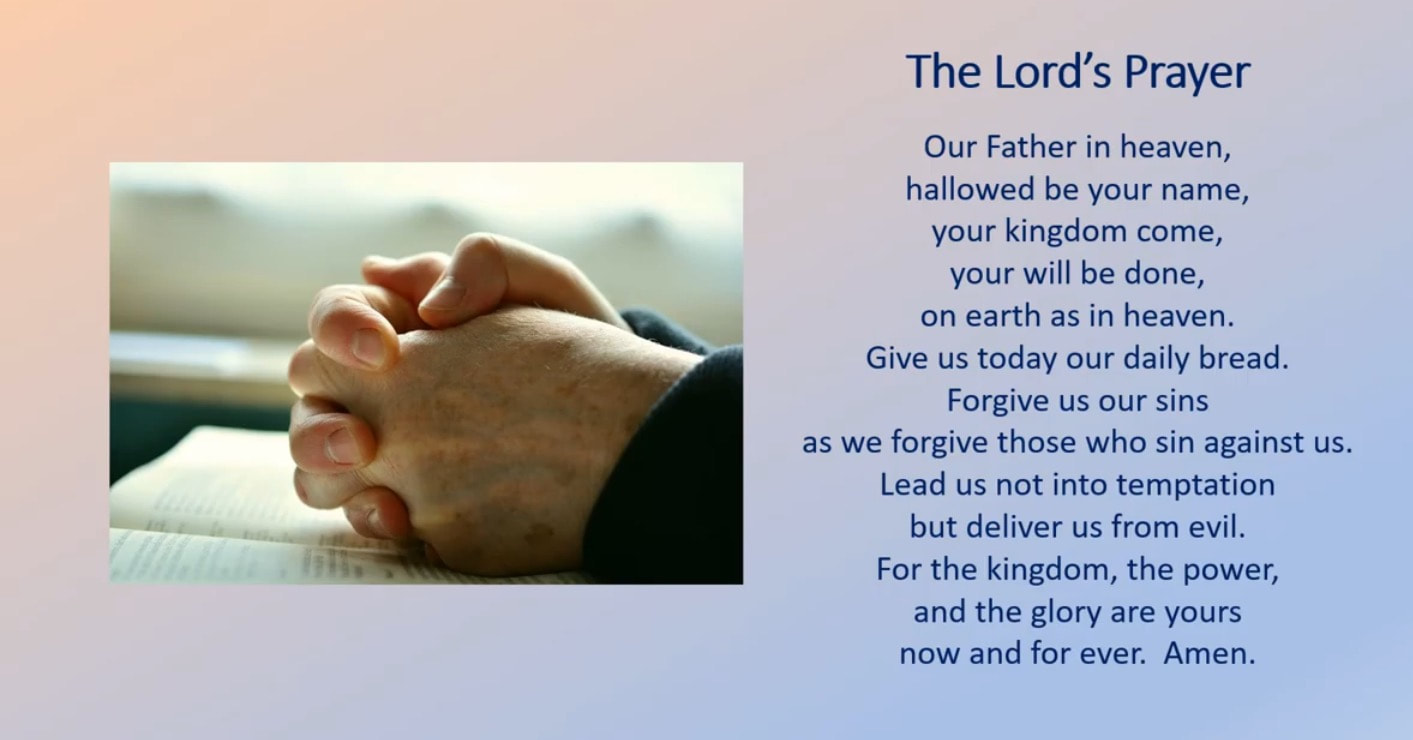
Post Communion Prayer
Strengthen for service, Lord, the hands that have taken holy things;
may the ears which have heard your word be deaf to clamour and dispute;
may the tongues which have sung your praise be free from deceit;
may the eyes which have seen the tokens of your love shine with the light of hope;
and may the bodies which have been fed with your body be refreshed with the fullness of your life;
glory to you for ever.
Amen
may the ears which have heard your word be deaf to clamour and dispute;
may the tongues which have sung your praise be free from deceit;
may the eyes which have seen the tokens of your love shine with the light of hope;
and may the bodies which have been fed with your body be refreshed with the fullness of your life;
glory to you for ever.
Amen

From The Church of England
You are invited to our Live service on Sunday from 9am on our website, Facebook or YouTube . It will be available for playback immediately after as well.
All of our weekly service content is manually subtitled and contains British Sign Language (BSL) interpretation throughout.
